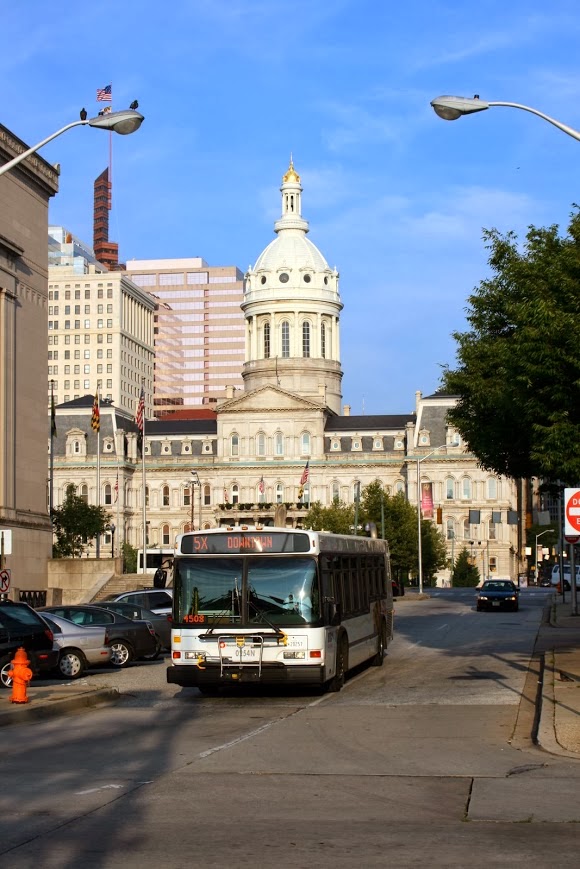
Just getting the chance to barely scratch the surface, but got a few snaps in today in spots.
Showing posts with label Equipment. Show all posts
Thursday, February 20, 2014
Wednesday, February 19, 2014
The Whirlwind Infatuation
Sometimes, things move glacially...
...and other times, they move with almost blinding speed. It seems strange to think of how rapidly my perspective has changed in the past 24 hours.
Just four days ago, I posted an article in reference to sensor sizes, and spent much of it referring to enthusiast compact cameras, and to a lesser degree, SLR's. In the article, I posted links to a number of competing compact cameras that I thought were pretty suitable for transit photography.
I made one tiny side-step reference of a single paragraph to an emerging format called Micro 4/3's but simultaneously expressed some dismissal of the format as being cost prohibitive compared to larger sensor compacts and DSLR's.
Tonight, I eat those words with a well seasoned helping of crow.
I am now a Micro 4/3's Camera Owner, and proud of it.
Yes, I'm a mixed bag of contradictions and reversals. Perhaps it's a Libra thing. More fittingly, and more likely, it's a cost thing.
The Sony RX-100 was growing on me. The fast lens and the large sensor just seemed perfect, but at the same time, I was a bit less enamored at paying upwards of $600 for Sony's toy. As I browsed the internet last night, a bored little voice in my head sent me looking at Craigslist, and that's when I saw it in the Photo-Video section - my next camera.
I am now the owner of an Olympus PEN E-PL2, a 2011 model camera that sports a 1.33" inch sensor, and comes with a 14-42mm lens that should cover most situations. The lens is interchangeable, so I may add a fast "prime" lens as well as an extended zoom.
Considering the camera was $125 compared to over $500 for a new one, it was a complete no-brainer. Reading reviews, there are many others who are developing a fondness with this new format, though I don't know if any adopted it quite as quickly as myself.
I will be sure to try to give this nice, svelte camera a run through its paces tomorrow and report back. Curious to see how this infatuation proceeds.
Meanwhile, keep that crow warm for me!
Saturday, February 15, 2014
Sensors: Size Matters
It's true: Size Matters.
Ok, I said it. Though I can also say it also obviously matters what you do with it.
The digital photography revolution has seen a myriad of trends already in just a decade and a half, particularly in the compact market segment. In the latter part of the aughts, there was a frivolous "Megapixel War" which saw typical camera specs balloon from 3MP to 12MP in just a few short years. While that has generally subsided, there remains an ongoing "Megazoom War" with bridge cameras capable of up to 50X Zoom levels. Add in a host of other sexy features such as scene modes, sweep panorama shots, and Wi-Fi connectivity, and you have the making of a marketer's wet dream.
But when it all comes down to it, there is one factor more likely than any of the aggressively promoted items above that is likely to have the most impact on the image quality of the photos you shoot: sensor size.
For a number of years, this aspect of digital photography was all but overlooked as manufacturers focused their attention on scintillating specs such as Megapixels and Zoom range. Even worse, to keep the costs of these seductive beasts at an attractive level, the consumer cameras of 2006-2009 typically had SMALLER sensors (1/1.8 on earlier models to 1/2.3 on later models) than their predecessors of just a few years prior. They claimed the newer sensors were better as they did more to eliminate light noise. Harrumph!
If we think back to the film era, larger formats always allowed the potential for far more image detail. While it was *possible* to take a better image with a 110 film SLR than with a cheap 35mm consumer camera, the same 110 camera could not complete with a 35mm camera of similar quality. Meanwhile, the 35mm cameras covered only a fraction of the space covered by medium and large film formats!
During the nadir of the High pixel count wars, there were a few compact camera models in particular, such as the Panasonic LX-3 and the Canon G-series line, that managed to keep some sanity in the compact camera mix by retaining 1/1.63 to 1/1.8 sensors. However, the price tags of these cameras combined with their limited zoom found them being overlooked by transit photographers who were wowed by the more affordable cameras with the more robust zoom lenses and smaller sensors.
Digital SLR's: Not so standard
Interestingly, unlike their film based predecessors that pretty much took images of the same 24x36 size, digital SLR's are actually broken down into two flavors, full frame versions (that run on the pricey side) and "Crop" cameras that use an APS-C size sensor that is significantly larger than compact sensors, but still measurably smaller than the full frame cameras. The result is that photos taken with these cameras have a multiplication factor involved that results in focal lengths of lenses that are longer than stated, so that a 50mm lens on an Crop camera behaves more like an 80mm.
Curious Aside: The name "APS-C" is actually ironic. In the mid-1990's, before the advent of the Digital era, camera and film manufacturers attempted to reinvent film photography by inventing a new format called APS (Advanced Photo System) that promised the ability to readily switch between Classic and Panoramic formats as well as easier film loading, and better information exchange between camera and film roll. The system was only struggling to get off the ground by the time the digital era came along and delivered the final death knell.
To make things even more complicated, an interchangeable lens format called Micro 4/3s has been released with a 1 1/3" sensor, smaller than the APS-C but larger than nearly all compacts. The advantages touted of cameras using these sensors is that they are much more compact in nature than SLR's but with better image quality than compacts. As a result, cameras using this technology, such as the Olympus PEN EP-1 tend to have a niche market among camera enthusiasts and a hefty pricetag to go along with it.
Meanwhile, in the Compact Market
Despite the attention to the Micro 4/3's product development, there remain new releases in the compact camera market that embody the legacy of cameras like the LX-3 by touting larger more capable sensors coupled with fast lenses:
There is variety to sensor types as well, but that may be for another article. In any event, following this link to the visual diagram attached to this article may help make a little more sense to the widely disparate sizes in sensors among SLR and compact cameras. It definitely helps to read reviews and compare features prior to purchasing a new camera to get the most bang for your buck.
Ok, I said it. Though I can also say it also obviously matters what you do with it.
The digital photography revolution has seen a myriad of trends already in just a decade and a half, particularly in the compact market segment. In the latter part of the aughts, there was a frivolous "Megapixel War" which saw typical camera specs balloon from 3MP to 12MP in just a few short years. While that has generally subsided, there remains an ongoing "Megazoom War" with bridge cameras capable of up to 50X Zoom levels. Add in a host of other sexy features such as scene modes, sweep panorama shots, and Wi-Fi connectivity, and you have the making of a marketer's wet dream.
But when it all comes down to it, there is one factor more likely than any of the aggressively promoted items above that is likely to have the most impact on the image quality of the photos you shoot: sensor size.
For a number of years, this aspect of digital photography was all but overlooked as manufacturers focused their attention on scintillating specs such as Megapixels and Zoom range. Even worse, to keep the costs of these seductive beasts at an attractive level, the consumer cameras of 2006-2009 typically had SMALLER sensors (1/1.8 on earlier models to 1/2.3 on later models) than their predecessors of just a few years prior. They claimed the newer sensors were better as they did more to eliminate light noise. Harrumph!
If we think back to the film era, larger formats always allowed the potential for far more image detail. While it was *possible* to take a better image with a 110 film SLR than with a cheap 35mm consumer camera, the same 110 camera could not complete with a 35mm camera of similar quality. Meanwhile, the 35mm cameras covered only a fraction of the space covered by medium and large film formats!
During the nadir of the High pixel count wars, there were a few compact camera models in particular, such as the Panasonic LX-3 and the Canon G-series line, that managed to keep some sanity in the compact camera mix by retaining 1/1.63 to 1/1.8 sensors. However, the price tags of these cameras combined with their limited zoom found them being overlooked by transit photographers who were wowed by the more affordable cameras with the more robust zoom lenses and smaller sensors.
Digital SLR's: Not so standard
Interestingly, unlike their film based predecessors that pretty much took images of the same 24x36 size, digital SLR's are actually broken down into two flavors, full frame versions (that run on the pricey side) and "Crop" cameras that use an APS-C size sensor that is significantly larger than compact sensors, but still measurably smaller than the full frame cameras. The result is that photos taken with these cameras have a multiplication factor involved that results in focal lengths of lenses that are longer than stated, so that a 50mm lens on an Crop camera behaves more like an 80mm.
Curious Aside: The name "APS-C" is actually ironic. In the mid-1990's, before the advent of the Digital era, camera and film manufacturers attempted to reinvent film photography by inventing a new format called APS (Advanced Photo System) that promised the ability to readily switch between Classic and Panoramic formats as well as easier film loading, and better information exchange between camera and film roll. The system was only struggling to get off the ground by the time the digital era came along and delivered the final death knell.
To make things even more complicated, an interchangeable lens format called Micro 4/3s has been released with a 1 1/3" sensor, smaller than the APS-C but larger than nearly all compacts. The advantages touted of cameras using these sensors is that they are much more compact in nature than SLR's but with better image quality than compacts. As a result, cameras using this technology, such as the Olympus PEN EP-1 tend to have a niche market among camera enthusiasts and a hefty pricetag to go along with it.
Meanwhile, in the Compact Market
Despite the attention to the Micro 4/3's product development, there remain new releases in the compact camera market that embody the legacy of cameras like the LX-3 by touting larger more capable sensors coupled with fast lenses:
- Sony RX-100 - a 1" sensor and a f/1.8 3.6x zoom lens.
- Fujifilm X20 - a 2/3" sensor and a f/2 4x zoom lens.
- Nikon Coolpix P780o - 1/1.7" sensor and a f/2 7x zoom lens.
- Canon Powershot G16 - 1/1.7" sensor and a f/1.8 5x zoom lens.
- Panasonic Lumix LF1 - 1/1.7" sensor and a f/2 7x zoom lens.
- Olympus XZ-2 - 1/1.7" sensor and a f/1.4 4x zoom lens.
- Samsung EX2F - 1/1.7" sensor and a f/1.4 3.3x zoom lens.
There is variety to sensor types as well, but that may be for another article. In any event, following this link to the visual diagram attached to this article may help make a little more sense to the widely disparate sizes in sensors among SLR and compact cameras. It definitely helps to read reviews and compare features prior to purchasing a new camera to get the most bang for your buck.
Friday, February 14, 2014
The Equipment Bag
A Confession
My SLR is not my primary camera.
There. I said it. I'll let it sink in for a minute before trying to explain why - if I can.
I can readily admit that is does seem a bit hypocritical of me to not always be carrying my best possible equipment with me at all times, after I just made a post praising the late Edward S. Miller, particularly for investing in a high end Leica camera with which to take such phenomenal photos.
I can try to "blame" the heft of my DSLR as the reason for this, as I certainly could not see myself lugging my Canon with me on a daily basis on the rather marginal chance that I should happen to spot a "must have" photo on my commute. That aside, there have been times when I specifically went out for the purposes of transit photography and used a compact camera instead of it, and still other times when I went out for transit photography and did not even bring my Digital SLR.
Heresy.
What had happened was...
In all honesty, there have been a number of occasions when my digital SLR would not be able to get the shot my Compact camera would. Seriously. No really, I'm saying this with a straight face.
My SLR is a Canon EOS Digital XTI, which is a particularly competent camera, though it does have its limitations. The most telling limitation is that it is not a "full frame" SLR, but rather what is typically called a "crop camera" in that the sensor does not fully cover the lens rating, leading to about a 50% increase in focal length. A 50mm lens on this camera acts more like an 80mm lens. For zoomed in shots, this can be admittedly pretty great. If I put on my 70-210mm lens and zoom it out, it's pulls in and compresses distant details to create a nicely detailed composition when taking photos with skyline backdrops.
However, when taking photos with a wider field of view, it can be admittedly a bit limiting. I only have three lenses for this camera: the "prime" 50mm/f1.7, the 70-210mm/f3.5-4.5, and the 28-80mm/f3.5-5.6. As a result, the "widest" I can go is to about a 45mm equivalent. There have been times when in the midst of composing a photo in a Downtown area, I am unable to get a prominent building on the skyline within the frame, requiring me to either reconsider the composition, or attempt to back up by as much as a half a block to fit the desired backdrop within the frame. Meanwhile, my compact cameras can back up to about a 28mm equivalent.
The Rundown:
Naturally, I haven't sampled the full variety of digital cameras available, but I've managed to use a pretty good variety of models nonetheless. Here is a sequential progression of the digital cameras I have toted around with me over the years, with a sample of its output, as well as some general thoughts.
My first digital camera was acquired second hand from a friend in early 2001, and I kept it for about 6 months before replacing it. It was able to get you a quick digital photo in ideal light pretty readily, but it was hardly comparable to film, with a modest 1.5MP range.
Acquired in July of 2001, this 3 MP camera was leaps and bounds ahead of the Fuji, with a fast f/2.0 3X Optical Zoom and some really great color rendition and features. It was my daily tagalong for years, when I finally supplanted it with another camera in 2005. Even then, I still carried along for a while, before regrettably leaving it on a bus one day.
Lured by the sexiness of 10X Zoom and 640x480 video, I bit for this camera in February of 2005. I found myself taking more video and fewer stills however, as I never quite felt this camera had quite the pleasing image results as the old Casio. Still, I kept this 3MP Bridge camera until it quit on its own in about 2009.
Generally not too impressed with the stills on the S-1 IS, and wanting improved video, I went in on the Z-1275 in September of 2007, which promised Schneider Optics, a 12MP resolution, and 720p video. Sadly, the features were all fluff, with the video lacking image stabilization, and the image quality being pretty lackluster in stills.
Admittedly bought (in Febraury of 2009) to function almost entirely as a discreet video camera for transit photography with its 720p Stereo Image Stabilized video, the Sony performed great in that role, though its rare use as a photography camera was limited in features and with output even worse than the Kodak.
Increasing frustration in finding a compact digital camera that didn't use a small sensor while it played the Megapixel race, but which wasn't as expensive as the unique and niche Panasonic LX-3 led me to look on Ebay in the Spring of 2009 to find the successor to my beloved QV-3000, the 4000 model that was released back in 2001. It didn't disappoint either, as it began to make transit photography fun once again.
Finally in the Summer of 2009, I could no longer hold out. The "new" Casio had reawakened my interest in photography, but I could see where its image quality was pretty dated. If I really wanted a highly detailed image, I would have to pony up the money for a digital SLR. After doing some research, I finally decided upon this model and managed to find one at a reasonable price, used on Craigslist. The camera has proven to be a capable performer, though I admit it is not quite as fun or intuitive to use as the Casio models. After all, ease of use is apparently not its main penchant.
But I didn't stop there. There were (and continue to be) some limitations with using the SLR, most notably the focal length on the wider end, but also the lens speed. While the Canon works well until ISO400, the zoom lenses only stop down to f/3.5 at best, leaving twilight and night shots to be pretty futile. Similarly, color rendition on the Canon could be really flat in certain conditions, requiring a lot of post processing. When I spotted a new Samsung camera in early 2011 that used a larger sensor than most compacts while sporting an F/1.7 lens, I elected to pull the trigger.
The TL-500 has pretty much become my tagalong camera on the daily commute, due to its compact size, light weight, and robust performance. It is by no means a substitute for my digital SLR, but it can be quickly used in situations where my SLR would struggle. Interestingly however, while I have had this camera for nearly 3 years, I have yet to take it out on its own specifically for a transit shoot the way I would have readily done without question with the Casio cameras.
Perhaps I just don't feel the same level of comfort with this camera. I'm not sure if it is more to do with a lack of confidence in it being able to handle all the situations I might encounter, or if it has more to do with me simply having the knowledge that I have the SLR now.
That's my story and I'm sticking to it.
Looking ahead, I'm not sure what my next equipment move might be. I have perused everything from a large-sensored, fast camera like the Sony RX-100 to the ultrafast successor to my TL-500 in the compact category, but may ultimately take the plunge for a more capable Canon SLR that will allow me to arm myself with two lenses at the ready at the same time.
Suggestions?
My SLR is not my primary camera.
There. I said it. I'll let it sink in for a minute before trying to explain why - if I can.
I can readily admit that is does seem a bit hypocritical of me to not always be carrying my best possible equipment with me at all times, after I just made a post praising the late Edward S. Miller, particularly for investing in a high end Leica camera with which to take such phenomenal photos.
I can try to "blame" the heft of my DSLR as the reason for this, as I certainly could not see myself lugging my Canon with me on a daily basis on the rather marginal chance that I should happen to spot a "must have" photo on my commute. That aside, there have been times when I specifically went out for the purposes of transit photography and used a compact camera instead of it, and still other times when I went out for transit photography and did not even bring my Digital SLR.
Heresy.
What had happened was...
In all honesty, there have been a number of occasions when my digital SLR would not be able to get the shot my Compact camera would. Seriously. No really, I'm saying this with a straight face.
My SLR is a Canon EOS Digital XTI, which is a particularly competent camera, though it does have its limitations. The most telling limitation is that it is not a "full frame" SLR, but rather what is typically called a "crop camera" in that the sensor does not fully cover the lens rating, leading to about a 50% increase in focal length. A 50mm lens on this camera acts more like an 80mm lens. For zoomed in shots, this can be admittedly pretty great. If I put on my 70-210mm lens and zoom it out, it's pulls in and compresses distant details to create a nicely detailed composition when taking photos with skyline backdrops.
However, when taking photos with a wider field of view, it can be admittedly a bit limiting. I only have three lenses for this camera: the "prime" 50mm/f1.7, the 70-210mm/f3.5-4.5, and the 28-80mm/f3.5-5.6. As a result, the "widest" I can go is to about a 45mm equivalent. There have been times when in the midst of composing a photo in a Downtown area, I am unable to get a prominent building on the skyline within the frame, requiring me to either reconsider the composition, or attempt to back up by as much as a half a block to fit the desired backdrop within the frame. Meanwhile, my compact cameras can back up to about a 28mm equivalent.
Impossible with the SLR
The Rundown:
Naturally, I haven't sampled the full variety of digital cameras available, but I've managed to use a pretty good variety of models nonetheless. Here is a sequential progression of the digital cameras I have toted around with me over the years, with a sample of its output, as well as some general thoughts.
My first digital camera was acquired second hand from a friend in early 2001, and I kept it for about 6 months before replacing it. It was able to get you a quick digital photo in ideal light pretty readily, but it was hardly comparable to film, with a modest 1.5MP range.
Acquired in July of 2001, this 3 MP camera was leaps and bounds ahead of the Fuji, with a fast f/2.0 3X Optical Zoom and some really great color rendition and features. It was my daily tagalong for years, when I finally supplanted it with another camera in 2005. Even then, I still carried along for a while, before regrettably leaving it on a bus one day.
Lured by the sexiness of 10X Zoom and 640x480 video, I bit for this camera in February of 2005. I found myself taking more video and fewer stills however, as I never quite felt this camera had quite the pleasing image results as the old Casio. Still, I kept this 3MP Bridge camera until it quit on its own in about 2009.
Generally not too impressed with the stills on the S-1 IS, and wanting improved video, I went in on the Z-1275 in September of 2007, which promised Schneider Optics, a 12MP resolution, and 720p video. Sadly, the features were all fluff, with the video lacking image stabilization, and the image quality being pretty lackluster in stills.
Admittedly bought (in Febraury of 2009) to function almost entirely as a discreet video camera for transit photography with its 720p Stereo Image Stabilized video, the Sony performed great in that role, though its rare use as a photography camera was limited in features and with output even worse than the Kodak.
Increasing frustration in finding a compact digital camera that didn't use a small sensor while it played the Megapixel race, but which wasn't as expensive as the unique and niche Panasonic LX-3 led me to look on Ebay in the Spring of 2009 to find the successor to my beloved QV-3000, the 4000 model that was released back in 2001. It didn't disappoint either, as it began to make transit photography fun once again.
Finally in the Summer of 2009, I could no longer hold out. The "new" Casio had reawakened my interest in photography, but I could see where its image quality was pretty dated. If I really wanted a highly detailed image, I would have to pony up the money for a digital SLR. After doing some research, I finally decided upon this model and managed to find one at a reasonable price, used on Craigslist. The camera has proven to be a capable performer, though I admit it is not quite as fun or intuitive to use as the Casio models. After all, ease of use is apparently not its main penchant.
But I didn't stop there. There were (and continue to be) some limitations with using the SLR, most notably the focal length on the wider end, but also the lens speed. While the Canon works well until ISO400, the zoom lenses only stop down to f/3.5 at best, leaving twilight and night shots to be pretty futile. Similarly, color rendition on the Canon could be really flat in certain conditions, requiring a lot of post processing. When I spotted a new Samsung camera in early 2011 that used a larger sensor than most compacts while sporting an F/1.7 lens, I elected to pull the trigger.
The TL-500 has pretty much become my tagalong camera on the daily commute, due to its compact size, light weight, and robust performance. It is by no means a substitute for my digital SLR, but it can be quickly used in situations where my SLR would struggle. Interestingly however, while I have had this camera for nearly 3 years, I have yet to take it out on its own specifically for a transit shoot the way I would have readily done without question with the Casio cameras.
Perhaps I just don't feel the same level of comfort with this camera. I'm not sure if it is more to do with a lack of confidence in it being able to handle all the situations I might encounter, or if it has more to do with me simply having the knowledge that I have the SLR now.
That's my story and I'm sticking to it.
Looking ahead, I'm not sure what my next equipment move might be. I have perused everything from a large-sensored, fast camera like the Sony RX-100 to the ultrafast successor to my TL-500 in the compact category, but may ultimately take the plunge for a more capable Canon SLR that will allow me to arm myself with two lenses at the ready at the same time.
Suggestions?
Subscribe to:
Posts (Atom)